Thursday, July 10, 2025
SEO vs. Paid Ads vs. Local Directories: What Actually Gets You Leads?

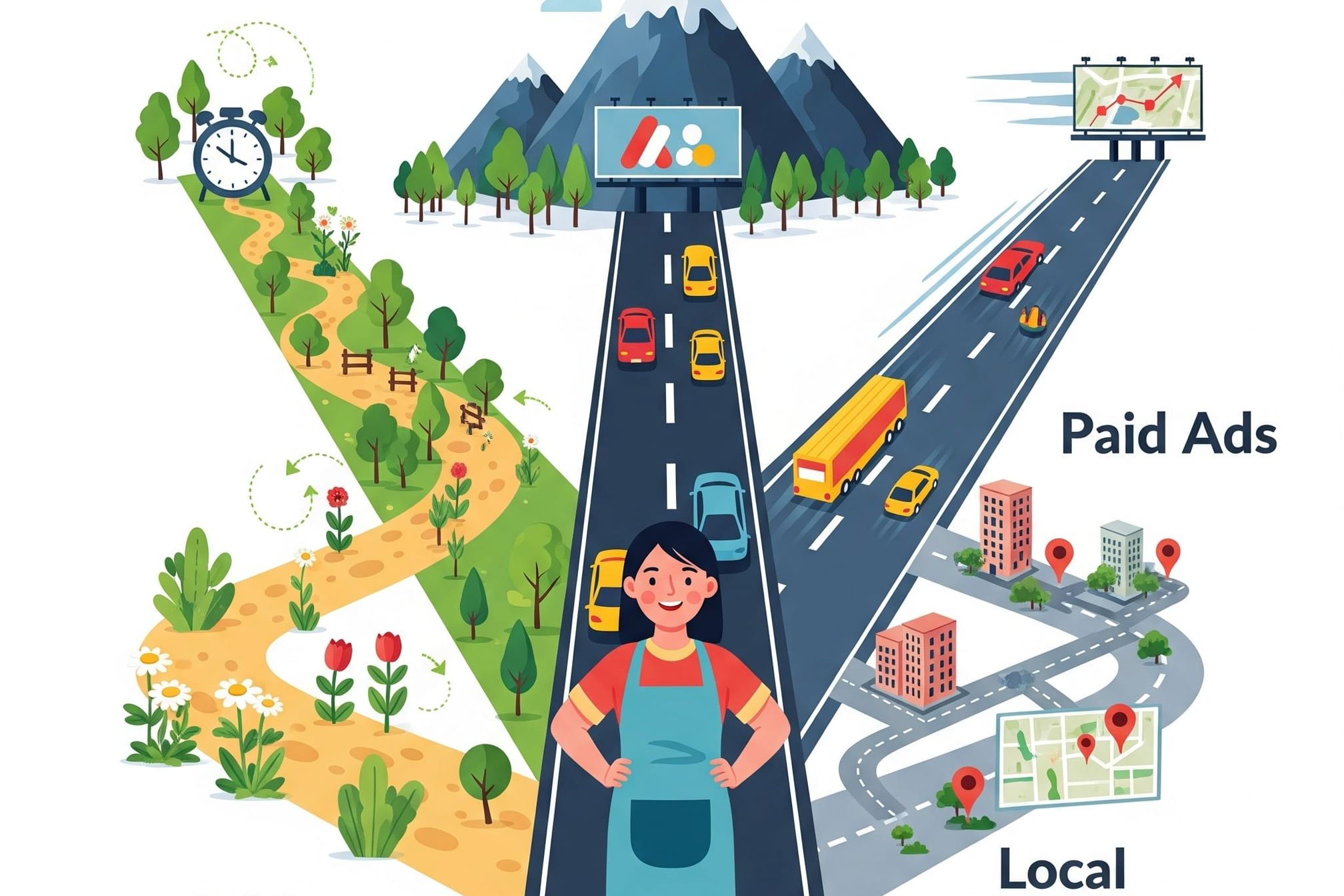
Imagine this month’s marketing calendar:
- You’ve cranked out three blog posts, hoping Google will notice.
- You boosted two Facebook posts for $200, chasing quick clicks.
- You paid Yelp for a “featured” badge that was supposed to light up your phone.
End of the month? A few calls, a handful of contact-form fills, and the uneasy feeling that you’re still guessing which channel actually works.
If that roller-coaster resonates, keep reading. We’ll cut through the noise and compare SEO, paid ads, and local directories on the metrics that matter most: speed, cost, lead quality, and long-term ROI. By the end, you’ll know when to lean on each channel—and how to combine them into a pipeline that never runs dry.
1. Channel Snapshots: How Each One Works
1.1 SEO – Search Engine Optimization
- What it is: Optimizing your website and content so Google (and Bing) rank you organically for relevant searches.
- Key levers: Keyword research, on-page copy, technical setup, local citations, backlink building, regular content.
- Primary goal: Earn “free” clicks from motivated searchers without paying per visit.
1.2 Paid Ads – Pay-Per-Click (PPC)
- What it is: Buying visibility on platforms like Google Ads, Microsoft Ads, Facebook/Instagram, or YouTube.
- Key levers: Targeting, ad copy, bid strategy, landing-page experience, conversion tracking.
- Primary goal: Appear instantly for high-intent keywords (search ads) or reach defined audiences (social/display) and pay only when they click.
1.3 Local Directories
- What they are: Listings on platforms that curate local providers—Google Business Profile (GBP), Yelp, Angi, Nextdoor, niche industry indexes.
- Key levers: Complete profile fields, gather and respond to reviews, keep NAP (name-address-phone) consistent, post updates.
- Primary goal: Capture local intent (“[plumber near me]”) and build trust through visible reviews and badges.
2. Cost & Timeline Showdown
SEO
- Typical monthly investment: $500–$3,000+ (DIY content to agency retainers).
- Time to see traction: 3–6 months for low-competition niches; 9–12 months for crowded markets.
- Cost per lead (CPL) trend: Starts high, decreases as rankings solidify—often drops below $30 over time.
Paid Ads (PPC)
- Typical monthly spend: $1,000–$5,000+ (ad budget) plus optional management fees.
- Time to see traction: Same day—ads turn on instantly.
- CPL trend: Immediate but variable; can range $40–$200+ depending on industry and ad quality. Continues as long as you fund the campaign.
Local Directories
- Typical cost: Free for basic listings, $300–$1,000+ for premium placements.
- Time to see traction: 1–4 weeks to gather initial reviews and ranking signals. GBP calls can come within days if profile is well optimized.
- CPL trend: Typically low if reviews are strong (often $20–$60) but plateaus without ongoing review acquisition.
3. Lead Quality & Buyer Intent
- SEO leads often carry the highest intent—searchers typed the problem and found you. Close rates in service businesses routinely land in the 20–30 % bracket.
- PPC leads can vary. Search ads mirror SEO intent but at a cost; social ads interrupt users, so expect broader top-of-funnel interest and lower close rates (15–25 % search, 5–12 % social/display).
- Directory leads lean on trust (review stars) but can include price shoppers. Average close rates fall around the 10–18 % range, spiking higher for urgent, local needs (e.g., locksmiths).
4. Pros, Cons, and Best-Fit Scenarios
SEO
Pros
- Compounding traffic that you don’t pay for per click
- Builds long-term brand authority
- Excellent lead quality
Cons
- Slow ramp-up
- Requires ongoing content or backlink effort
- Algorithm updates can shuffle rankings
Best fit: You plan to be in business for years and can invest patience and content sweat equity.
Paid Ads
Pros
- Switch on for instant traffic
- Laser-target by keyword, demo, or behavior
- Scale predictably with budget
Cons
- Costs stop the moment ads pause
- Platform learning curves (or agency fees)
- Click fraud and rising auction bids
Best fit: You need leads yesterday (grand opening, seasonal surge) or want precise control over volume.
Local Directories
Pros
- High trust via reviews and star ratings
- Some are free; even paid tiers are less than robust ad budgets
- Boost local SEO signals
Cons
- Dependence on third-party platform rules
- Lead quality varies and can skew price-shopping
- Must actively request and manage reviews
Best fit: You serve a local radius and can gather genuine, steady reviews from happy customers.
5. Hybrid Strategy: Stacking Channels for Maximum ROI
Month 0–1: Quick Wins
- Claim and fully optimize Google Business Profile.
- Launch a narrowly targeted PPC search campaign for your top money keyword.
- Request five-star reviews from recent customers to elevate directory trust quickly.
Month 2–4: Foundation
- Publish two optimized service pages or blog articles per month (SEO groundwork).
- Layer remarketing ads to nurture PPC clickers who didn’t convert.
- Expand reviews to Yelp or an industry-specific directory.
Month 5–12: Compounding
- Re-invest a slice of PPC profit into deeper SEO (content clusters, backlinks).
- Trim ad spend on keywords where you now rank organically; redirect budget to new territories or offers.
- Automate review requests post-service to keep directories fresh.
Outcome: Paid ads deliver immediate cash flow, local listings build social proof, and SEO snowballs into your lowest-cost, highest-intent lead source—all working together instead of in silos.
6. Quick Calculator: Pick Your Channel in 3 Steps
- Estimate cost per lead (CPL) for each channel in your industry (ask peers, agencies, or use platform benchmarks).
- Multiply CPL by leads needed to reach your revenue goal. Use the formula: Leads needed = (Revenue goal ÷ Average deal size) ÷ Close rate
- Compare investment vs. timeline. If PPC’s CPL still yields profit and you need results in 30 days, start there while seeding SEO. If margins are thin, lean on directories + SEO and extend the runway.
Frequently Asked Questions
Is SEO or PPC cheaper in the long run?
SEO usually wins on long-term cost once rankings stick, but PPC can be cheaper for short bursts or niche keywords with low competition.
Do local directories still work in 2025?
Absolutely—especially Google Business Profile. Searches with “near me” intent still default to the local pack, and star ratings heavily influence clicks.
Can I run SEO and PPC simultaneously?
Yes, and many high-growth businesses do. PPC captures bottom-funnel demand today; SEO builds a pipeline that lowers your average CPL tomorrow.
Conclusion
No single channel owns the throne forever:
- SEO compounds but demands patience.
- Paid ads deliver speed but keep the meter running.
- Local directories earn trust but rely on consistent reviews.
Smart small businesses stack them—using PPC for immediate volume, directories for credibility, and SEO for sustainable, low-cost growth.
Get clarity on what works best for small businesses
Ready to see the exact mix for your market, budget, and goals? Click below for a no-fluff assessment and live demo of how LeadAxle tailors channel strategy to turn guessing into predictable growth.
Get clarity on what works best for small businesses →
Disclaimer: Benchmarks reflect industry averages as of July 2025. Your results will vary based on competition, offer quality, and execution. Always track your own metrics before scaling spend.